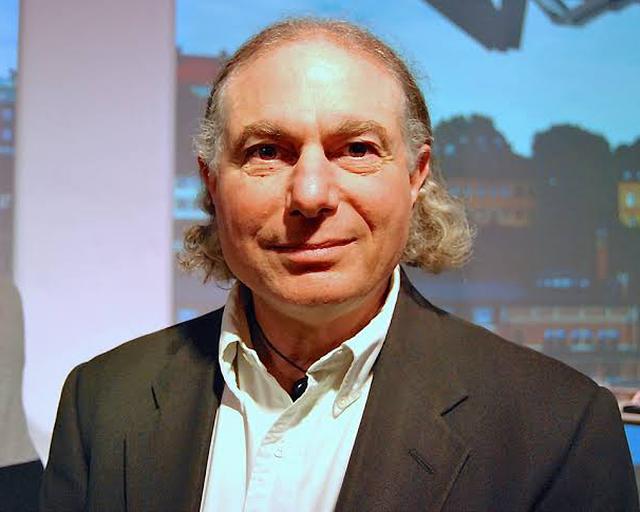
US-amerikanischer Lernforscher John Falk über den Wert von Museen / Foto: Future Museum
The value of museums is not in our collections
Von:
Sofia Widmann (MUSEUM BOOSTER, Wien), John Falk, Wien
Museum audiences have been John Falk's subject for more than four decades. In conversation with Sofia Widmann (Founder & CEO of MUSEUM BOOSTER), the researcher explains why half of all visitors do not come primarily for the exhibitions, why the sector keeps talking to the same ten per cent, and why the real value of a museum should be measured in the liveability of the city around it.
Ask a museum why people walk through its doors and the answer often is: to see the collection, to learn something, to encounter the exhibition.
Ask John Falk and the answer is different. ‘People come to museums to satisfy their own needs and interests,’ he says. ‘They do not typically come because they are trying to satisfy the museum's needs and interests.’
They also do not come for just one reason. They come out of curiosity, to be with friends and family, because a museum is a quiet and restorative place, or because a relative is visiting from out of town. Falk's point is that museums typically misjudge the diversity of benefits they support and, thus, the diversity of reasons people use them. Learning about the content, he estimates, is the primary motivation of only about half of all visitors. ‘It is not that visitors do not care about the exhibits and content, but that is not always their primary reason for coming.’
The mirror image — why people do not come — has the same answer. ‘If you do not perceive that a museum is capable of satisfying your needs or interests, you will not go.’ Non-visitors are people who have concluded, rightly or wrongly, that the museum is not where their needs and interests are likely to be met. And the scale is easily understated: in audience research, a frequent visitor is someone who comes perhaps three to five times a year. ‘Most people most of the time are not museum goers,’ Falk says.
What the shopping centre understands
Commercial venues see their customers far more often, and Falk attributes this to one structural advantage and one strategic one. The structural advantage is money: larger budgets, spent continuously. ‘In marketing 101, you need to send out a message dozens of times before you can expect people to pay attention to it. There are not very many museums who do that kind of saturating advertising.’
The strategic advantage is a harder truth. For more than 100 years, commercial marketing professionals have understood that what sells is the satisfaction of a need, not the specification of a product. Car advertising, Falk notes, rarely dwells on engine capacity. ‘They talk about it in terms of how buying this car will enhance your sense of feeling that you are a successful person, that you will look good in this car.’ Museum marketing, by contrast, addresses the visitor's cognition: what’s on display. ‘But most people are making these decisions, as much as anything, subconsciously based on their emotional needs. And so not only are we not able to compete financially with commercial places, we are not even using the tools that we have very effectively to reach our users.’
The strategic advantage is a harder truth. For more than 100 years, commercial marketing professionals have understood that what sells is the satisfaction of a need, not the specification of a product. Car advertising, Falk notes, rarely dwells on engine capacity. ‘They talk about it in terms of how buying this car will enhance your sense of feeling that you are a successful person, that you will look good in this car.’ Museum marketing, by contrast, addresses the visitor's cognition: what’s on display. ‘But most people are making these decisions, as much as anything, subconsciously based on their emotional needs. And so not only are we not able to compete financially with commercial places, we are not even using the tools that we have very effectively to reach our users.’
Four dimensions of well-being
Falk's framework reduces the thousands of individual reasons for a visit to four dimensions of well-being, and its origins lie partly in biology. All living things, he argues, have a sense of self and of agency, expressed as a drive towards well-being — not merely happiness, but the broader set of conditions that support flourishing. Applied to museums, this yields four categories. Intellectual well-being covers curiosity, the objects and the stories being told. Personal well-being covers self-understanding, creativity, spirituality and the pleasure of awe. Social well-being reflects the fact that the vast majority of people visit as part of a group and are seeking to foster relationships. Physical well-being covers safety, beauty and rest: ‘as long as you are going to go someplace, you might as well go someplace beautiful and restful.’
The framework's power is comparative. Content makes an art museum and a science centre look incommensurable; well-being outcomes do not. ‘It allows us to much more successfully and powerfully and robustly understand the value that museums create.’
Falk is also a contributing researcher behind Future Museum, the global research community initiated and managed by Museum Booster, which ran its most recent phase across 44 institutions in 19 countries. His four dimensions of well-being are built into the network’s Holistic Visitor Journey Model, which integrates physical, digital and emotional engagement — and rests on the same premise as his ten principles: the visit begins long before arrival and continues long after the visitor leaves, so the framework used to design and measure it cannot start at the entrance and stop at the exit.
What the research found
Falk has operationalised these four dimensions across large-scale studies in different countries and institution types, interviewing visitors and returning to them a month later. Three findings stand out.
First, the benefits are universal: around 95 to 96 per cent of randomly approached visitors, he says, reported outcomes across all four dimensions — not a single benefit, but personal, intellectual, social and physical benefits together.
Second, they persist. Physical benefits, presumably the most ephemeral, lasted on average a week, he says. Social, intellectual and personal benefits lasted nearly two weeks, and for many were still present a month later, the limit of the study window. ‘The benefits of going to a museum are not just in the moment, they are persistent.’ Preliminary monetisation suggests the value created greatly exceeds the cost of creating it.
Third, a less comfortable finding: one group reported significantly greater benefits than any other — visitors who came to find out about some specific aspect of the art or the history, individuals who were already highly knowledgeable about the content of the museum. In other words, the visitors most like the people who work in museums. That group averages under ten per cent of attendance. ‘We are truly still primarily preaching to the choir. The good news is we are doing a reasonably good job with all of the people who come, but there is a lot of room for improvement with the vast majority of visitors.’
Asking better questions
Falk's research indicates that entry motivation is the single best predictor of what a visitor will remember and learn. Yet most institutions know their audiences only through numbers and postcodes, and he is unsentimental about why surveys disappoint. Asked directly, visitors supply the answer they believe is wanted. ‘If you ask questions in ways where people assume that there is a right answer, they are eager to answer in the right way.’ The remedy is not to abandon the enquiry but to conduct it properly: conversation rather than interrogation, several questions rather than one, and analysis that recognises three different-sounding answers as expressions of the same social motivation. ‘There has long been an expression in the social sciences: garbage in, garbage out.’
Here Falk sees the genuine promise of artificial intelligence. The ideal has always been to customise the experience to the individual; the obstacle has always been arithmetic. AI could narrow that gap — an audio guide that behaves less like a recording and more like ‘a really knowledgeable docent who was sensitive to the humans that they are talking with,’ talking with the visitor rather than at them.
Here Falk sees the genuine promise of artificial intelligence. The ideal has always been to customise the experience to the individual; the obstacle has always been arithmetic. AI could narrow that gap — an audio guide that behaves less like a recording and more like ‘a really knowledgeable docent who was sensitive to the humans that they are talking with,’ talking with the visitor rather than at them.
One thousand people, ten times
Global attendance continues to rise, but largely because the world keeps building museums. For an individual institution, the picture is flat or declining. ‘The easy thing is getting people to go to a museum once. The challenging thing is to get them to go back.’ No museum can open a new wing every year, and the blockbuster treadmill is an expensive route to success.
Falk offers a simple reframing. ‘What does it take to get 10,000 people to visit your museum? We could convince 10,000 people to come once, or we could convince 1,000 people to come ten times.’ The second is cheaper and follows from meeting needs well enough that people return — and tell others, with word of mouth being the most persuasive marketing there is.
Which returns us to the question directors find hardest. Falk has asked hundreds of them to state the value of their institution, and almost without exception they name one thing: seeing art, learning science, understanding history. ‘Essentially none of these directors seemed to be mindful of the fact that among their thousands of visitors, there are dozens and dozens of benefits created by their museum, only a handful of which are related to learning and understanding.’
His own answer shifts the ground. ‘The value of museums is not in our collections. It is not in our buildings. Our buildings and our collections and even our exhibits are the tools we use to create value. The value that is created by museums is how they support the public and the communities in which they reside.’
That, he argues, is the twenty-first-century case for the museum, and it is an economic one — not because museums employ people, but because they make cities more liveable, healthier and more vibrant. ‘That is the way I would argue that museum directors need to begin talking about the value of their institutions.’
Credits und Zusatzinfos:
Empfohlene Zitierweise:
Sofia Widmann im Gespräch mit John Falk, The value of museums is not in our collections, in: neues museum 26/3-4, www.doi.org/10.58865/13.14/2634/2.
Empfohlene Zitierweise:
Sofia Widmann im Gespräch mit John Falk, The value of museums is not in our collections, in: neues museum 26/3-4, www.doi.org/10.58865/13.14/2634/2.